Inflation Expected to Moderate Further to 14.14% in October
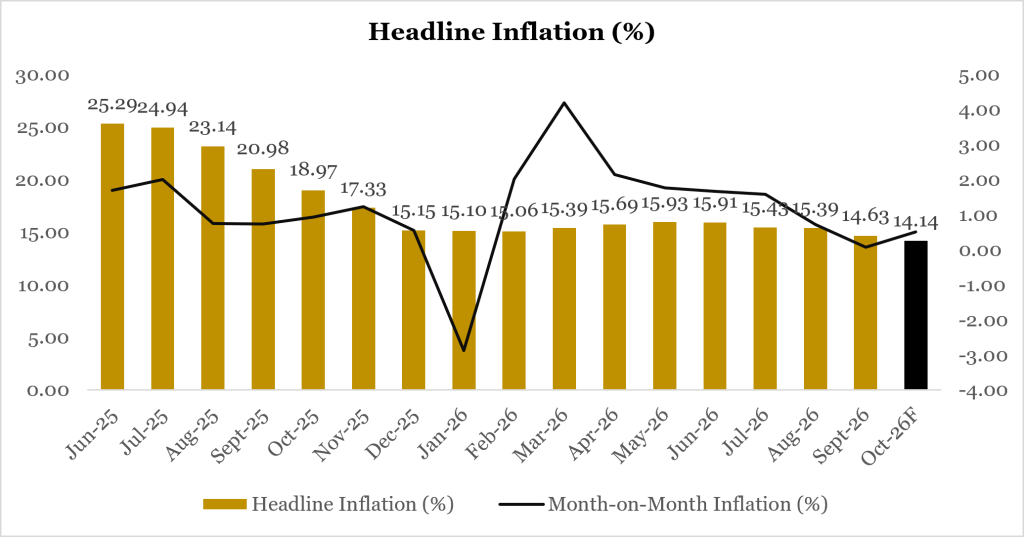
Nigeria’s inflation has shown signs of sustained improvement over the past four months, with headline inflation declining steadily from 15.93% in May 2026 to 14.63% in September. Based on our model, this trend is expected to extend into October, with the inflation rate projected to ease further to 14.14% year-on-year.
The projected decline in October inflation reflects the combined impact of relative exchange rate stability and seasonal improvements in food supply due to the harvest. With the onset of the harvest, there have been notable decline in the price of commodities such as tomatoes, yam tuber, plantains, etc. Hence, food inflation is expected to drop to 19.26%.
Core inflation is also expected to benefit from relative exchange rate stability. The Naira traded within a band of N1330.10-N1367.61 in October.
Falling inflation does not mean falling prices
Despite the anticipated improvement in headline inflation, the economic reality confronting households remain challenging. For many Nigerians, the cost-of-living crisis is still acute, as food, transportation, energy and other essential expenses continue to absorb a substantial proportion of disposable income. This apparent disconnect between improving macroeconomic indicators and persistent household pressures reflects a fundamental distinction that is often overlooked in interpreting inflation data: disinflation does not mean that prices are falling.
A decline in the inflation rate simply indicates that prices are increasing at a slower pace, rather than that goods and services are becoming cheaper. Hence, for households whose incomes have not adjusted sufficiently to reflect these cumulative increases, purchasing power remains constrained. This explains why the improvement in headline inflation may not immediately translate into a corresponding improvement in consumer sentiment or living standards.
From macroeconomic gains to microeconomic recovery
The improving inflation outlook should nevertheless be considered alongside the broader macroeconomic adjustments undertaken over the past two years. The removal of the petrol subsidy, exchange-rate liberalization and efforts to strengthen revenue mobilization were necessary to address longstanding economic distortions and restore greater macroeconomic stability. These reforms have contributed to improvements in key economic indicators, including the moderation in inflationary pressures and greater stability in the foreign exchange market. However, the adjustment process has imposed significant costs on households and businesses, with the benefits of these reforms yet to translate sufficiently into improved purchasing power, lower operating costs and stronger private-sector investment.
Hence, the next phase of economic policy should therefore focus on consolidating the gains from macroeconomic reforms while ensuring that their benefits become more visible at the household and business levels.